

 (Dr Trent Lipp is a Medical Emergency Physician at Royal Brisbane Hospital. His specific subject was COVID-19)
“Viruses – they are in the community everywhere” Dr Trent Lipp stated at the outset. “We carry them around unknowingly; every person in this meeting will have a virus in the next 24 – 48 hours… The problem is that when a virus comes from an immune host and then is carried to a host that is not immune. This can then cause a pandemic. The classics in recent times are the Ebola (transmitted from monkeys in Central Africa), Swine Flu (from pigs) and Avian Influenza (from birds). What about a “manufactured” virus? Was COVID-19 “manufactured”, as numerous stories circulate? Dr Lipp is quite certain that this is not the case.
Over the span of some 40 minutes, we were given an uncommonly straight and easy to understand outline of a very complex situation. There are so many different factors involved: not just the 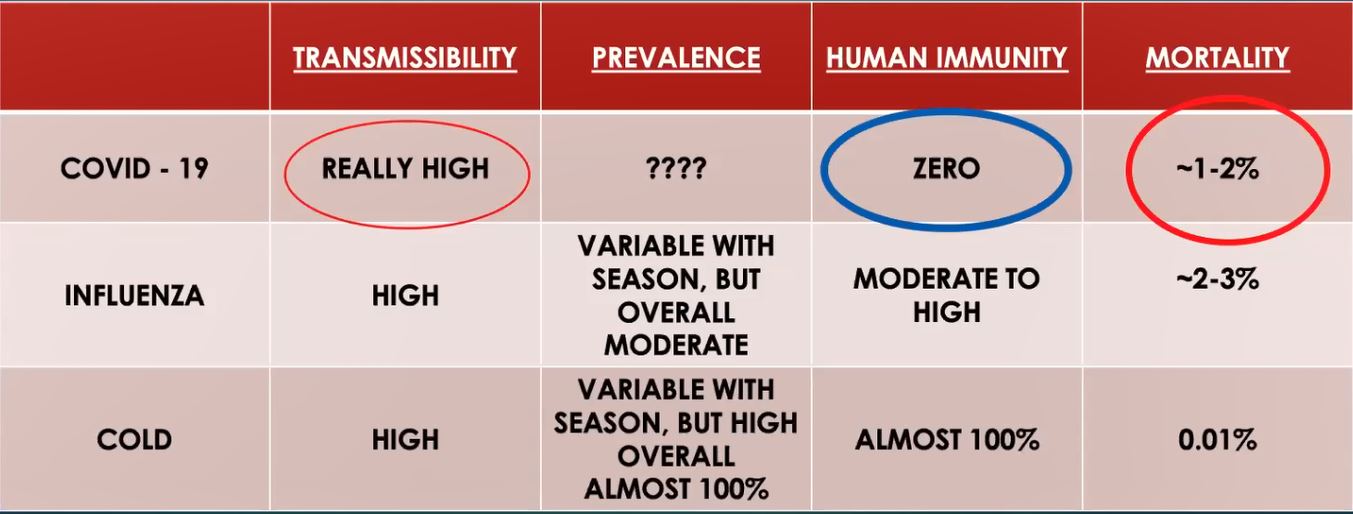 immunity, but also the prevalence. For example, the number of people in a community that have a disease which remains, at any point in time, undetected. Whether it is prevalent in a young or old community. This is extremely important: while we have the number of people who have tested positive, we don’t know how many have it undetected. Another issue is transmission: How easy is the disease spread to other people? How virulent? What is the incubation period? We know that droplets (e.g. from a sneeze) can cause transmission if it comes into the body (e.g. via the mouth). But if it is in Aerosol size, it can be inhaled, and ultimately, via the lungs, they’ll enter your bloodstream. As to incubation period: for example, with Ebola, it takes just 24 hours from being infected until the illness manifests itself. With COVID-19 it is...
immunity, but also the prevalence. For example, the number of people in a community that have a disease which remains, at any point in time, undetected. Whether it is prevalent in a young or old community. This is extremely important: while we have the number of people who have tested positive, we don’t know how many have it undetected. Another issue is transmission: How easy is the disease spread to other people? How virulent? What is the incubation period? We know that droplets (e.g. from a sneeze) can cause transmission if it comes into the body (e.g. via the mouth). But if it is in Aerosol size, it can be inhaled, and ultimately, via the lungs, they’ll enter your bloodstream. As to incubation period: for example, with Ebola, it takes just 24 hours from being infected until the illness manifests itself. With COVID-19 it is... ... 2 weeks! For that reason, the risk of wide spread distribution is much higher: if you don’t know you’ve got it, how many people would you interact with and potentially infect in a fortnight, and they in turn infect others, etc etc? That is one of the principal reasons why we are so desperate to avoid the spread, that is why we have a lock down and social distancing. We know some 97% of detected cases where they come from (International travellers making up about 90%). It is the 3% we don’t know who they are, and for a while, they themselves don’t know. If just one of them transmits COVID, it will very quickly become unmanageable.
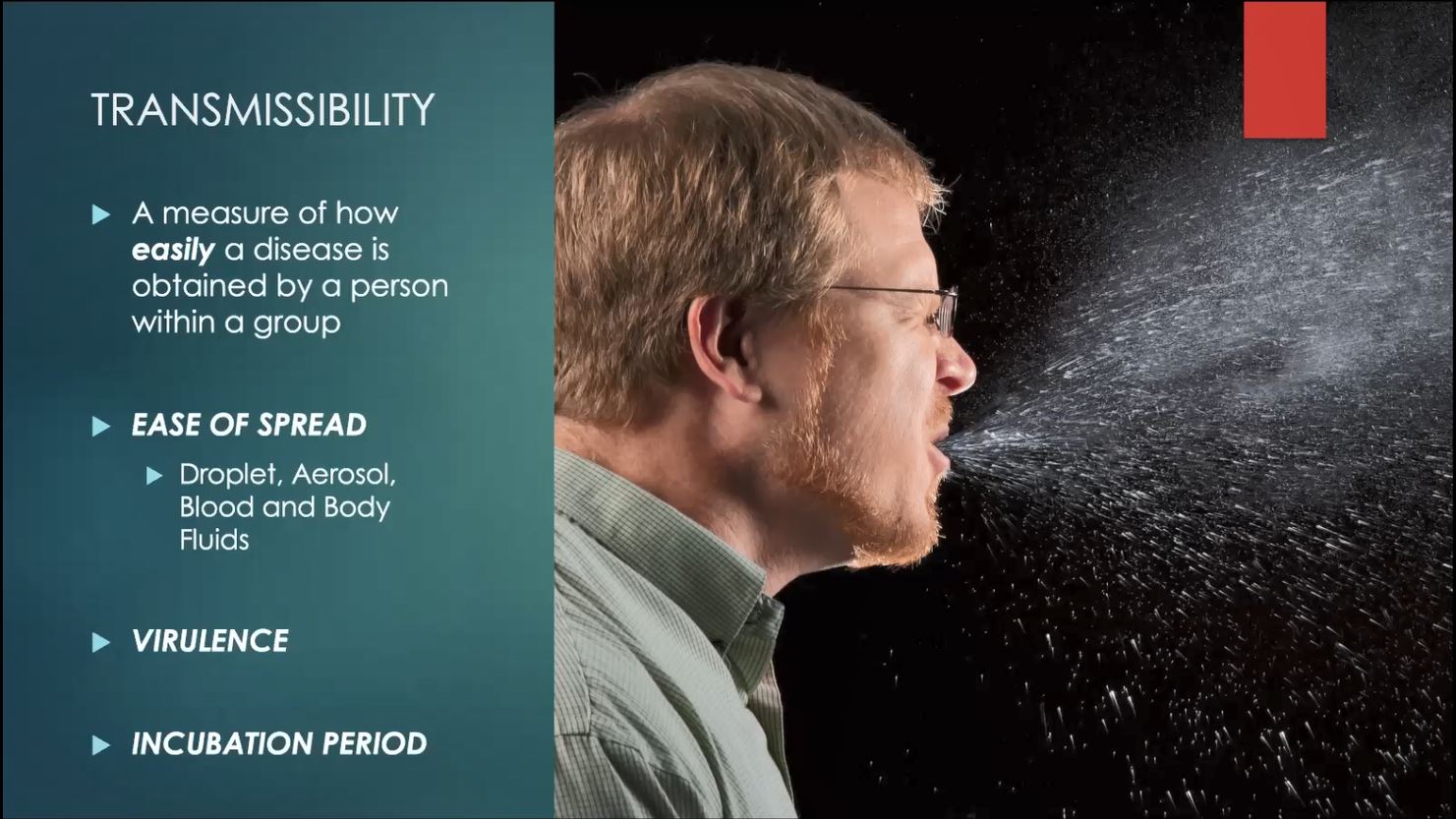 Finally, the virulence: Dr Lipp compared a virus to a survivor in the apocalypse: they survive for lengthy periods even if not fed or watered. Compared to a bacteria: it it doesn’t get fed regularly, it will simply die.
So, why not simply test everyone? Seems easy, but… it would mean that everyone needs to be tested every day until the virus is no longer detected at all. Simply not possible (after about two days, many simply wouldn’t come back) and besides, it would be far too expensive. So, what we are doing at present – regular hand washing, social distancing, lock down etc, is what will stop it, until a vaccine has been developed.
The new pandemic? Young people are already and will and continue to die. Mental Health and Suicide. Drugs. Domestic Violence. This will be the real pandemic, and will stay with us for a generation.
Want to get more information and statistics that are right up to date? The John Hopkins University maintains a continually updated website. Navigate to https://coronavirus.jhu.edu