

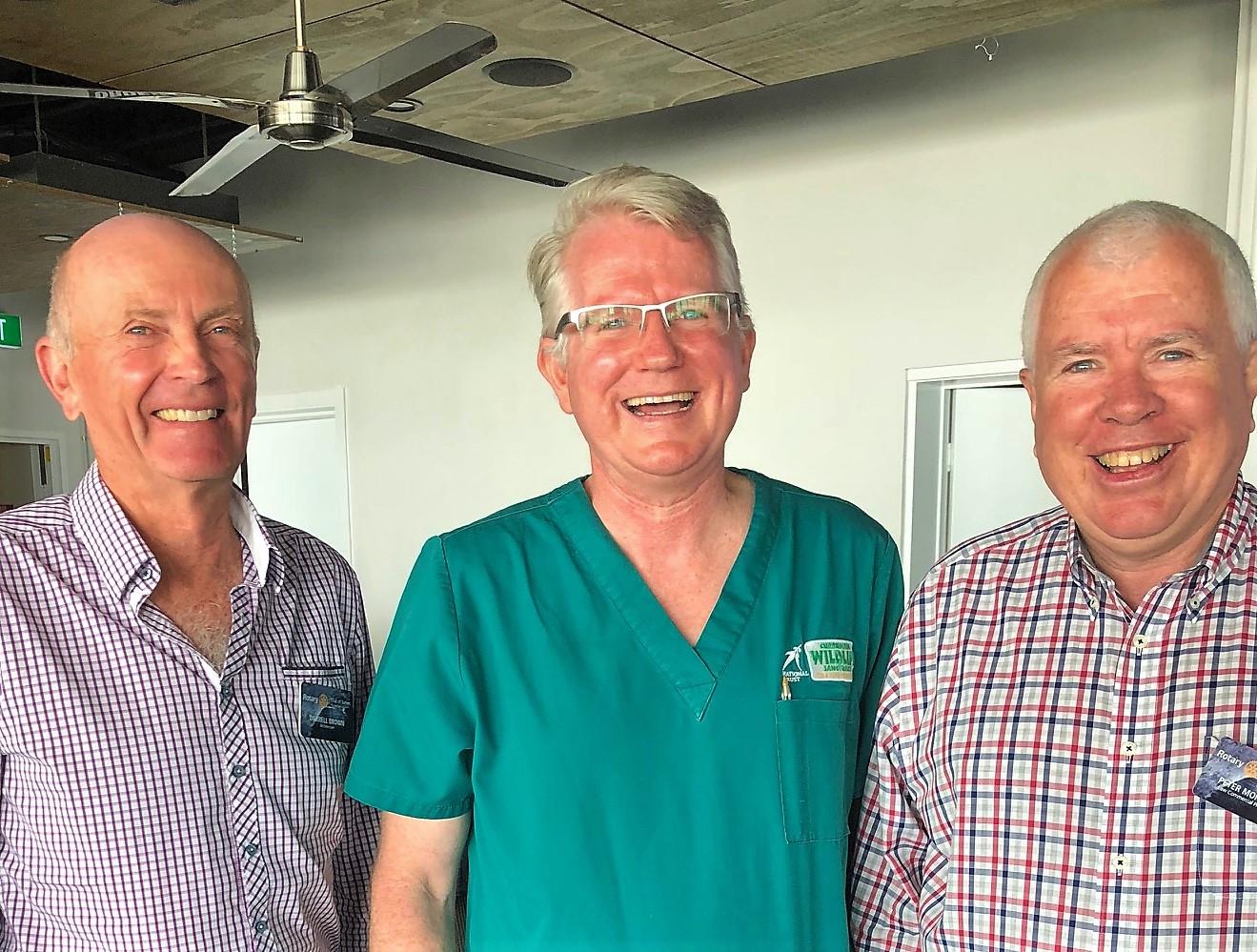
 Introduced by PDG Darrell Brown, Dr Michael Pyne is the Chief Veterinarian of the Currumbin Wildlife Sanctuary. (For those of you who are not familiar with this icon of Gold Coast Tourism: origially named the Currumbin Bird Sanctuary, there are now not just lots of birds but a wide range of Australian wildlife there. Click here for more details). And is there a more iconic Australian tourism icon than the Koala? Dr Mick is not just passionate about wildlife in general; this marsupial [no Henrietta, it is not a bear. ☺] has a special place in his heart. He warned some 5 years ago already that the Gold Coast Koala population is in crisis. Today it is even worse. And it is not, as one may expect, due to dog attacks or road injuries. It is disease that takes a bigger toll.
Dr Pyne said that Clamydia and Retrovirus are decimating the Koala population. Retrovirus is an AIDS-like immunodeficiency that leaves infected Koalas susceptible to infectious disease and cancers, while chlamydia causes painful urinary tract inflammation, infertility and blindness. Clamidia infection, a sexually transmitted disease, may have originally been transmitted from cattle, about 100 - 150 years ago. But the situation is not hopeless - things can and are being done to prevent it. "An experimental vaccine is showing a lot of promise," he says. "Every koala that comes through our hospital gets a vaccination, is micro tagged and earmarked.
Researchers have announced that a single-jab vaccine could halt the chlamydia epidemic wiping out Australia's koalas. In trials, the new vaccine has been shown to slow the rate of new infections and treat early-stage disease. Still, naturally the ever increasing real estate developments in our region doesn't help either, and to top it off we have Government Red Tape when it comes to arrange re-location. Since a Koala only eats certain types of Eucalyptus leaves, they either need to be relocated to a suitable area or else the food needs to be transported to where they are now. Cutting food every day is hard work (and expensive too!). On average, $70.00 is spent on every animal's treatment, and some 440 "patients" are coming in every year, up from 28 ten years ago. It's an iconic animal alright. Great for tourism. But, hang on! Shouldn't you simply care for the animal itself?
(Photo above, by Charles Thomasson: From left, PDG Darrell Brown, Dr Michael Pyne, Peter Morgan, who was meeting Chairman for the day)